Tax Notice
Guided Flow
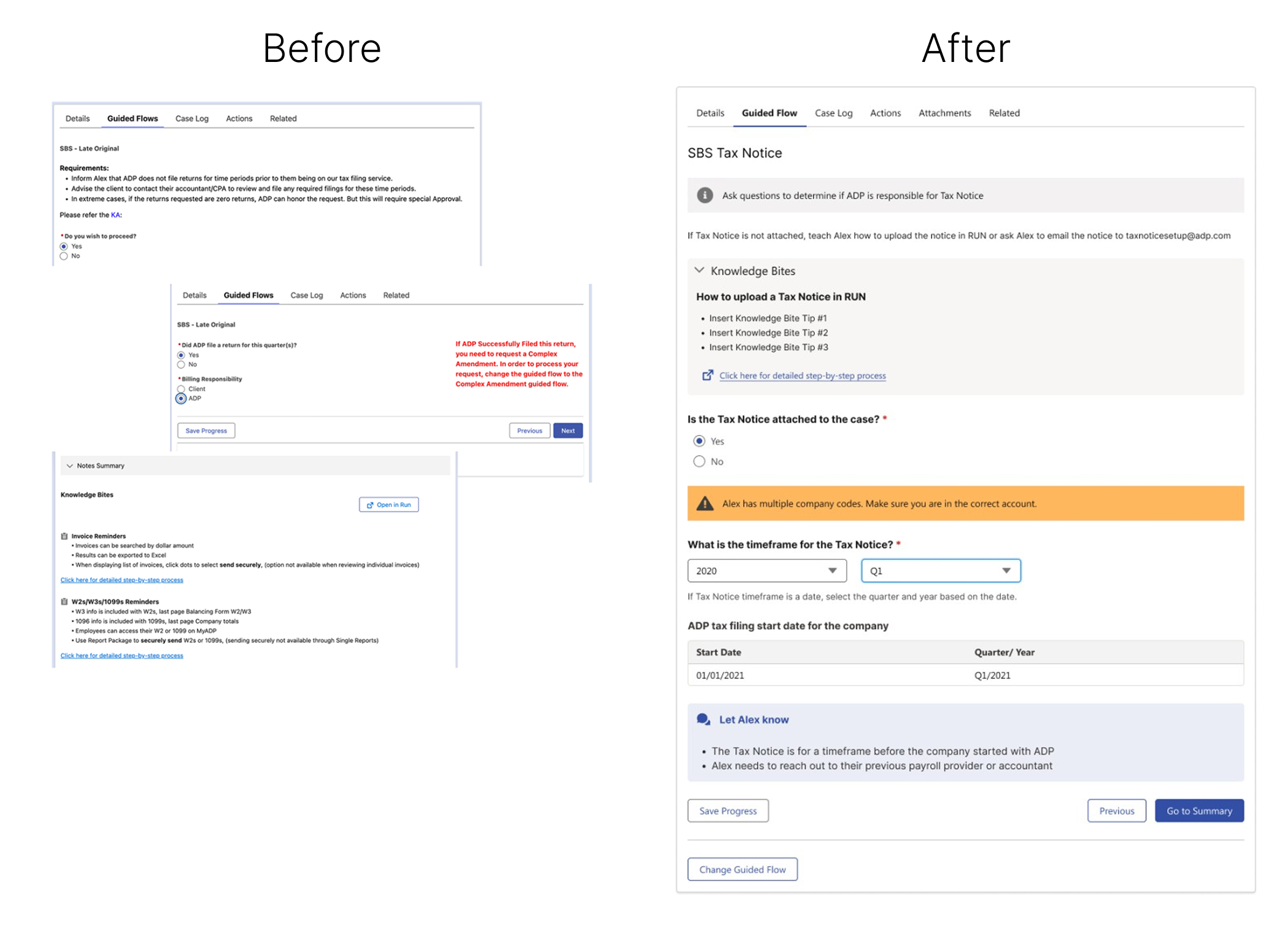
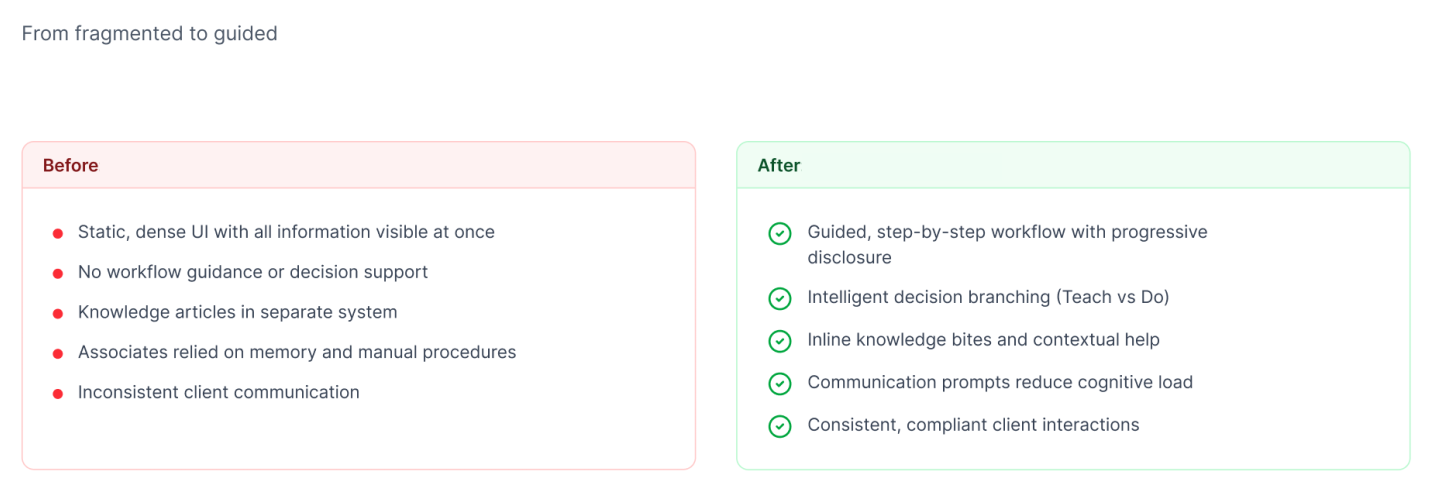
On a live call, an associate navigated three systems, consulted mental checklists, and made a judgment call with inconsistent results. This project replaced that judgment call with a structured decision.
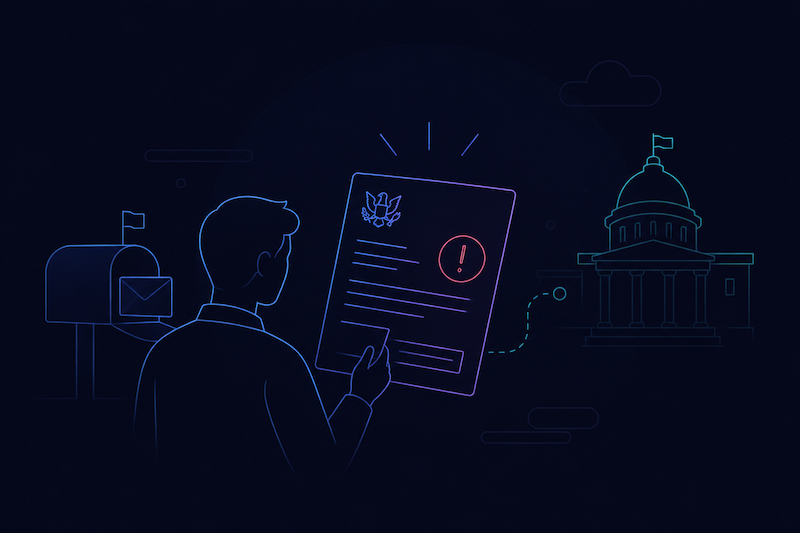
On a live call, an associate navigated three systems, consulted mental checklists, and made a judgment call with inconsistent results. This project replaced that judgment call with a structured decision.
01 — Context & Background
ADP associates support hundreds of thousands of business clients on payroll tax. When those clients receive tax agency notices from the IRS, state agencies, or unemployment bureaus, they call ADP expecting clarity, not more confusion.
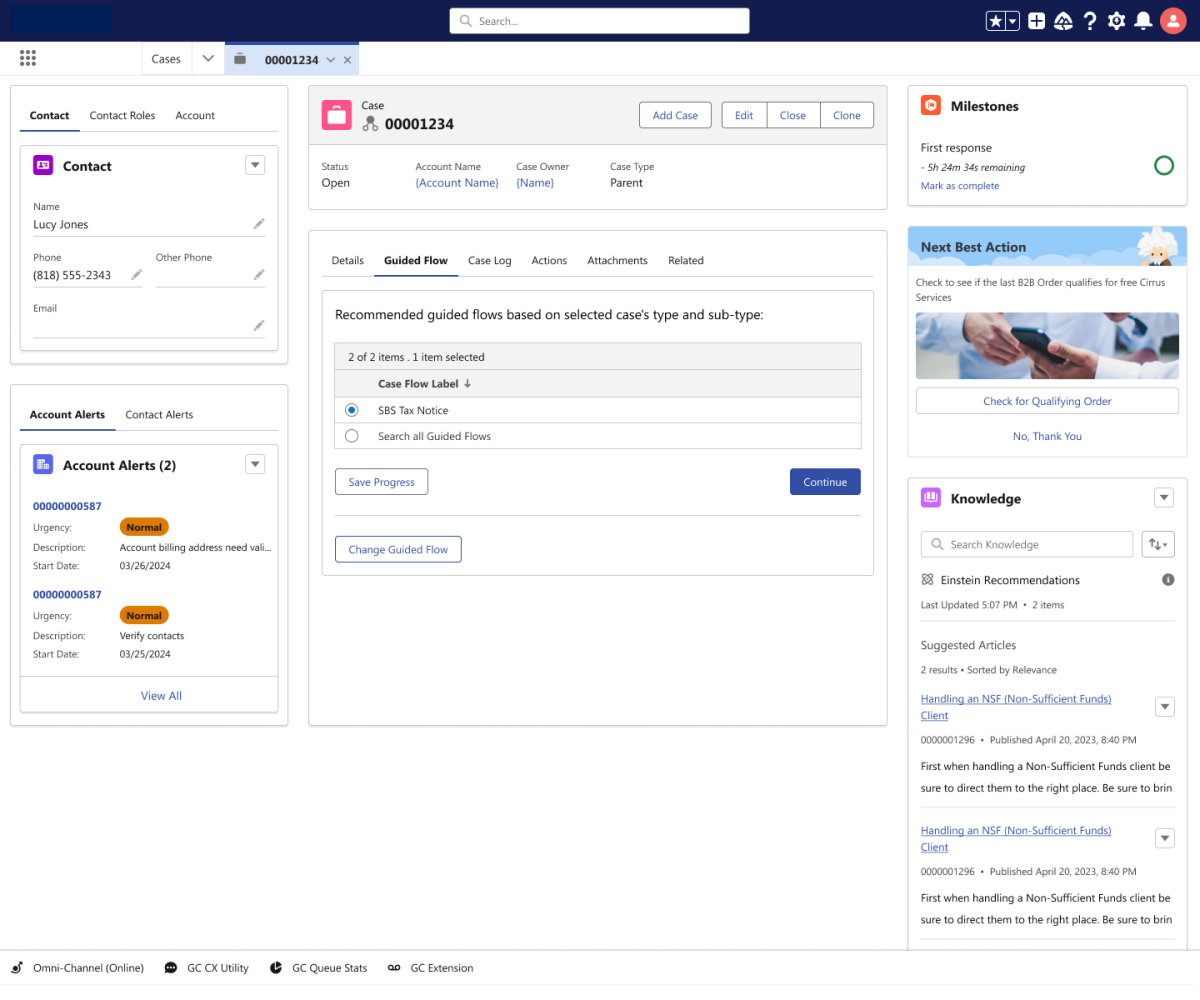
An enterprise support platform, built on Salesforce CRM. It's where associates live during every client interaction. The guided flow needed to embed within this platform. Associates are on live calls under time pressure. Every extra click, every system switch, every ambiguous decision costs the client.
The scale is significant. ADP manages payroll tax for over 300,000 small business clients with state and local jurisdictions. A tax notice can mean anything from a missed deposit, to a rate change, to a legal name mismatch, and the associate on the call often has seconds, not minutes, to classify which one.
02 — The Problem to Solve
The core failure was not a technology gap, it was a decision-support gap. Associates determined ownership, validated details, and choose to escalate or resolve based on training memory and personal judgment. The result was inconsistency at scale.
Research teams were the visible victims: they received cases that were incomplete, invalid, or could have been resolved on the initial call. Each avoidable escalation added 10 to 20 days to a client's wait. For a small business staring at a penalty notice, that delay had real financial consequences.
"During live, high-stress client calls, service associates lacked a standardized workflow to validate payroll tax notices. This resulted in inconsistent case intake, increased cognitive load that impacted handling times, and avoidable escalations that delayed case resolution to 10–20 days, compounding client anxiety and exposing businesses to costly regulatory penalties."
03 — My Role & Collaboration
I owned the end-to-end UX lifecycle: from researching how associates handled calls and mapping the complex decision logic, to designing a guided flow structure tailored to the technical constraints of Salesforce Flow-Builder.
My specific contributions:
04 — Discovery & Research
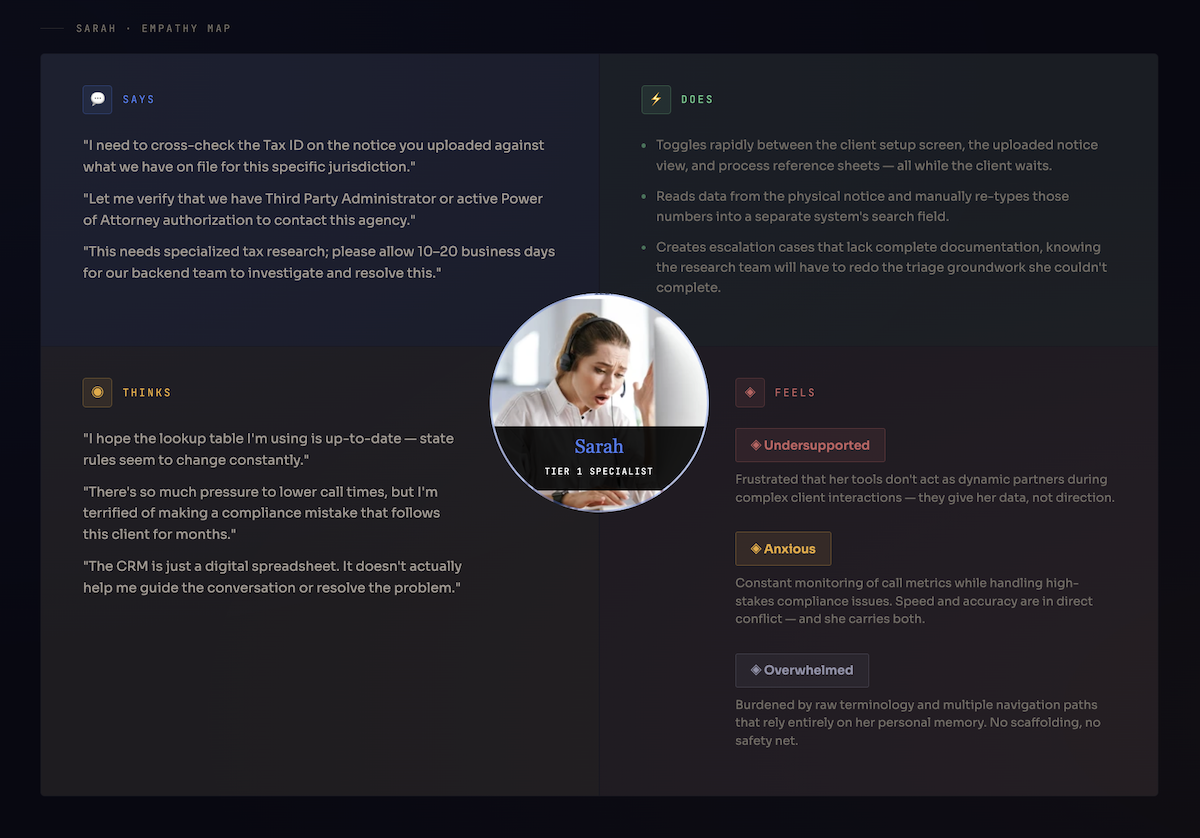
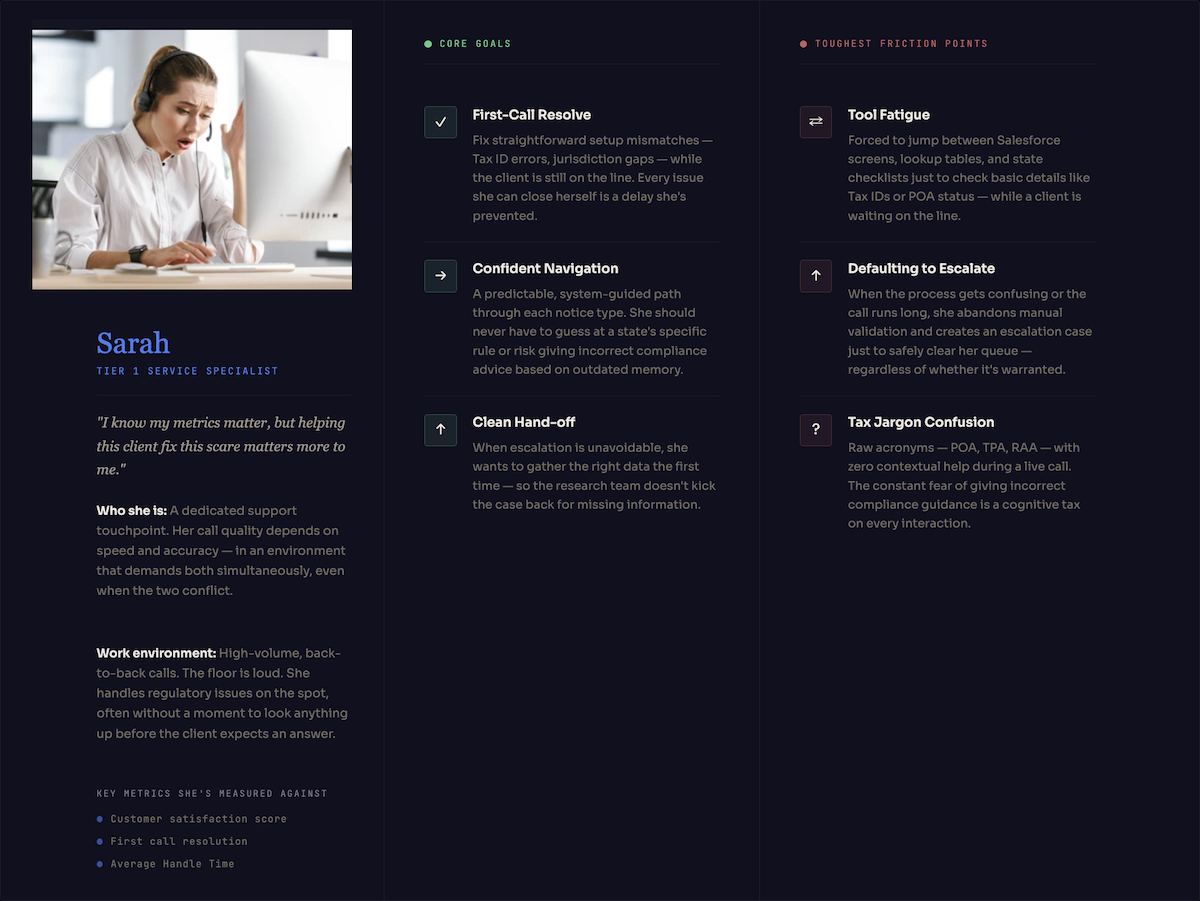
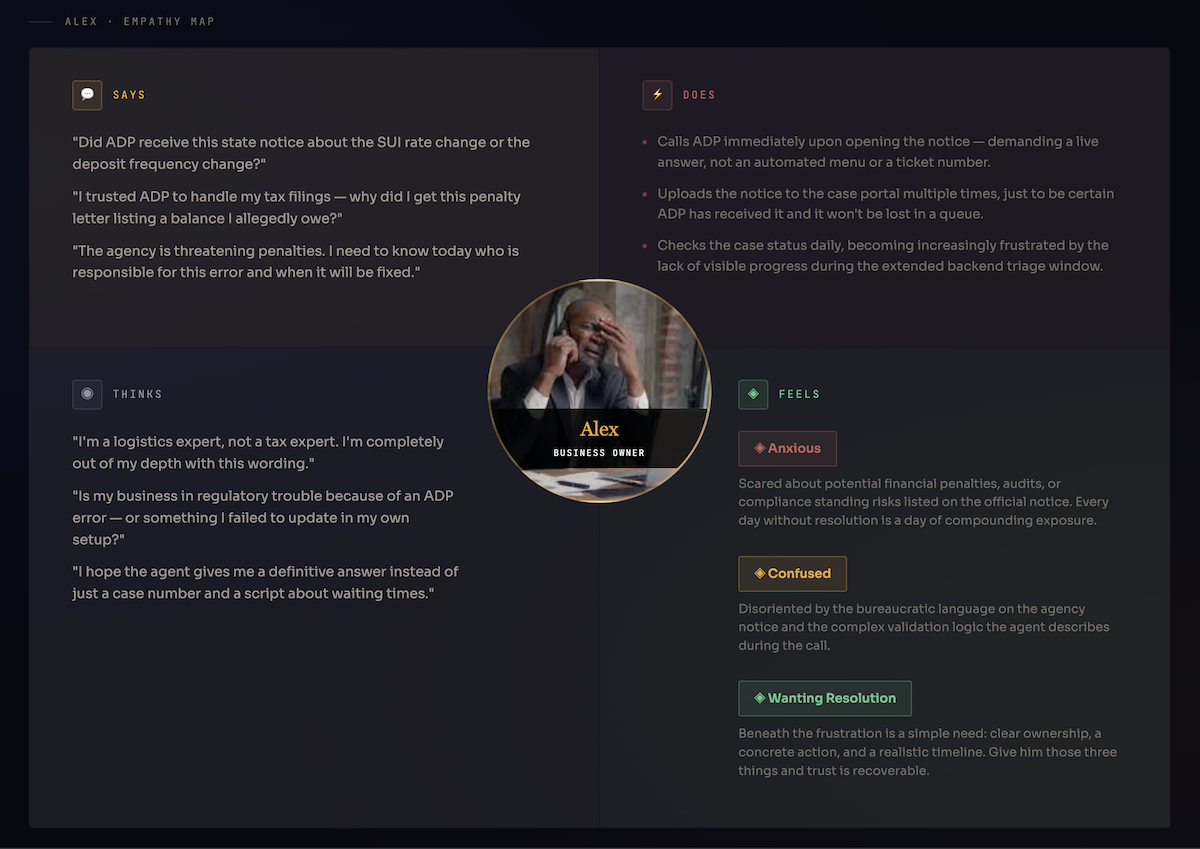
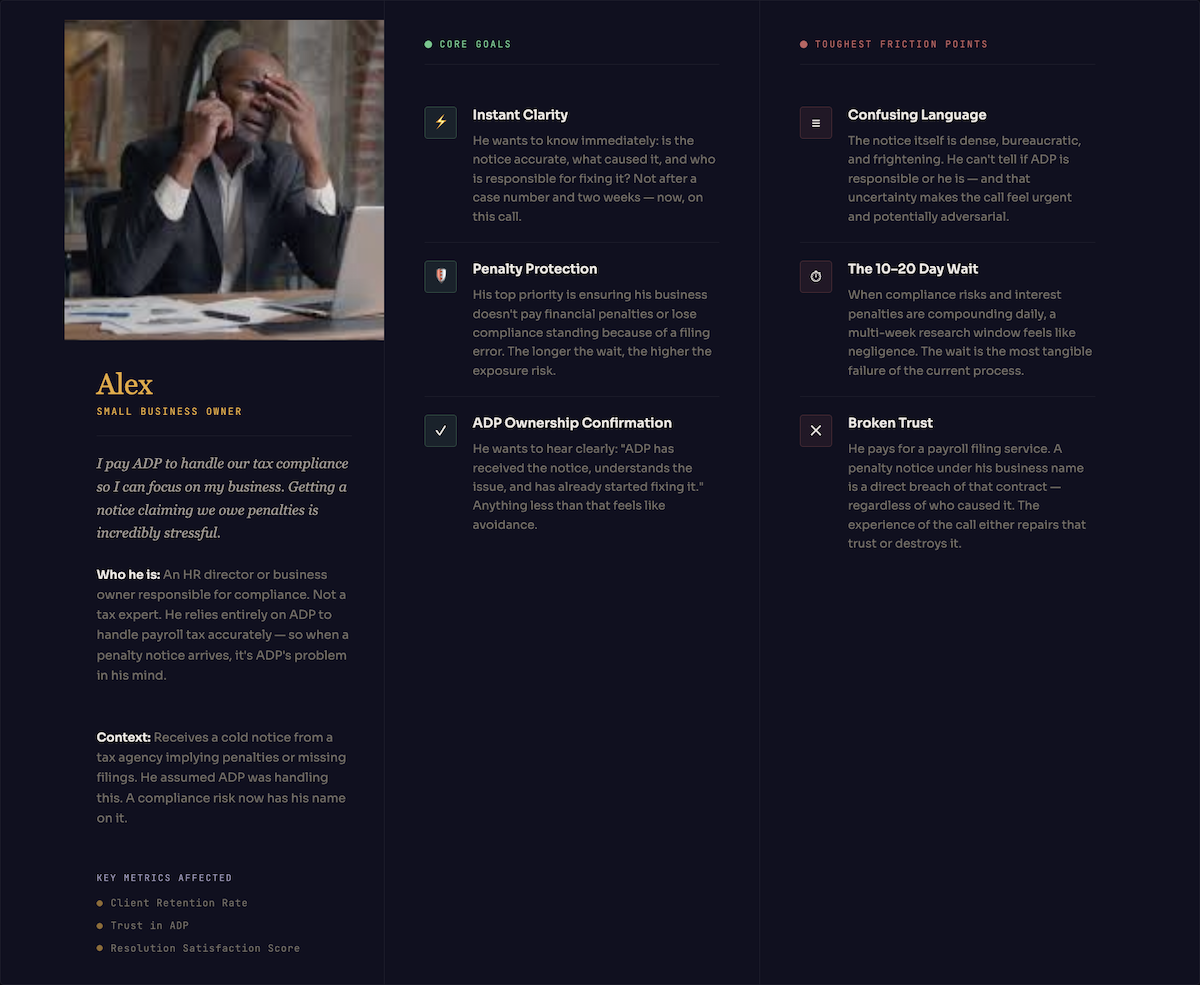
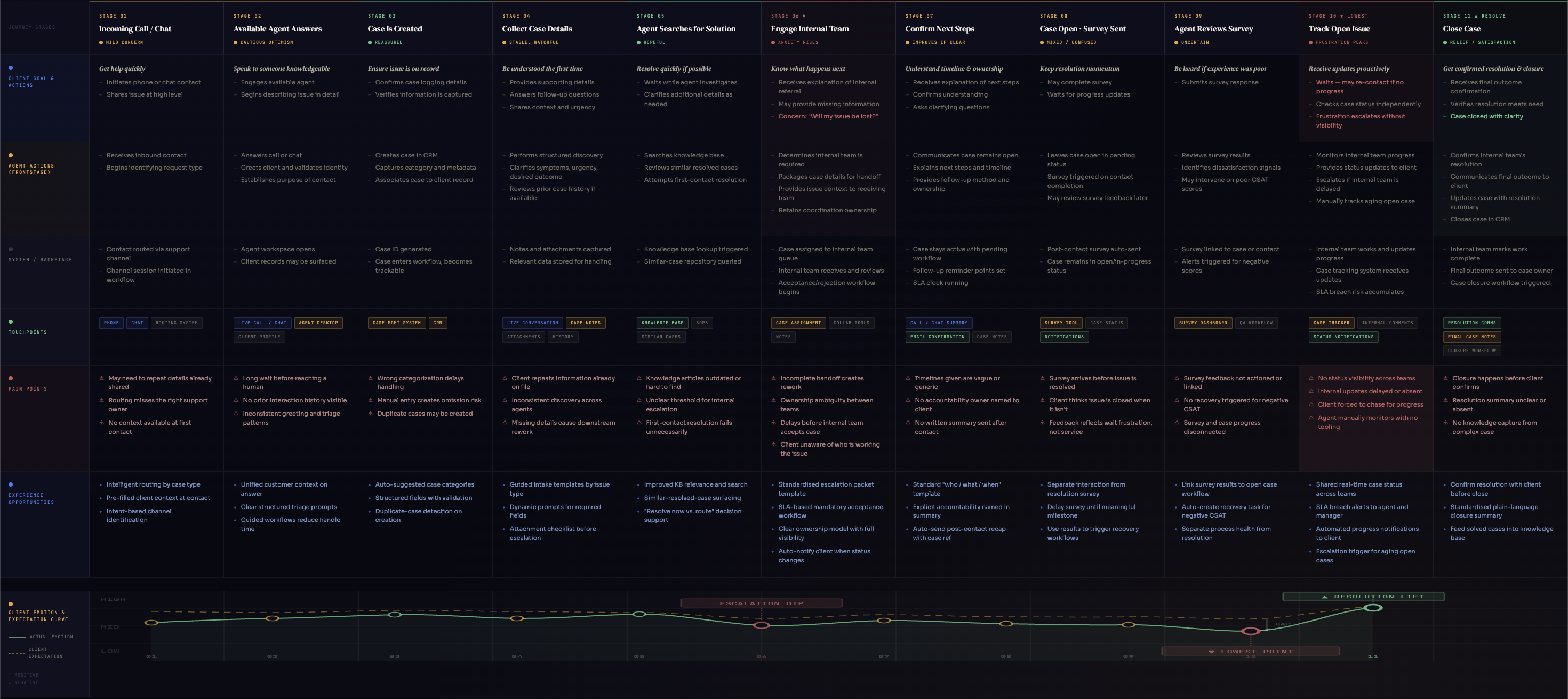
Discovery focused on two things: mapping what associates actually did during tax notice calls, and identifying where the process broke down, not in theory, but in the specific moment of a live client interaction.
Research inputs included associate interview, stakeholder conversations, process documentation, existing workflow diagrams, Salesforce/support case handling patterns, SME walkthroughs, and research team intake requirements. The goal wasn't to document the full policy, it was to find the decision points that caused inconsistency.
The critical insight: most associate uncertainty clustered around the same questions. Is this ADP's period? Is the jurisdiction set up? Does the Tax ID match? Does ADP have authorization? These weren't rare edge cases, they were the standard path, and they had no in-platform support.
05 — Hypothesis & Design Principles
The central design hypothesis was about sequencing, not simplification. The tax rules themselves didn't need to be hidden, they needed to be revealed in the right order, at the right moment, through the right question.
The guided flow's core value was not speed. It was consistency. An associate who is confident in their decision, because the platform walked them through validation, serves the client better than an associate who is fast but uncertain. That insight shaped every design decision that followed.
"If associates are guided through a structured tax notice validation flow, then they will determine responsibility more consistently, resolve eligible cases during the call, reduce unnecessary escalations, and give clients clearer expectations without requiring associates to memorize every exception or rule."
06 — The Proposed Solution
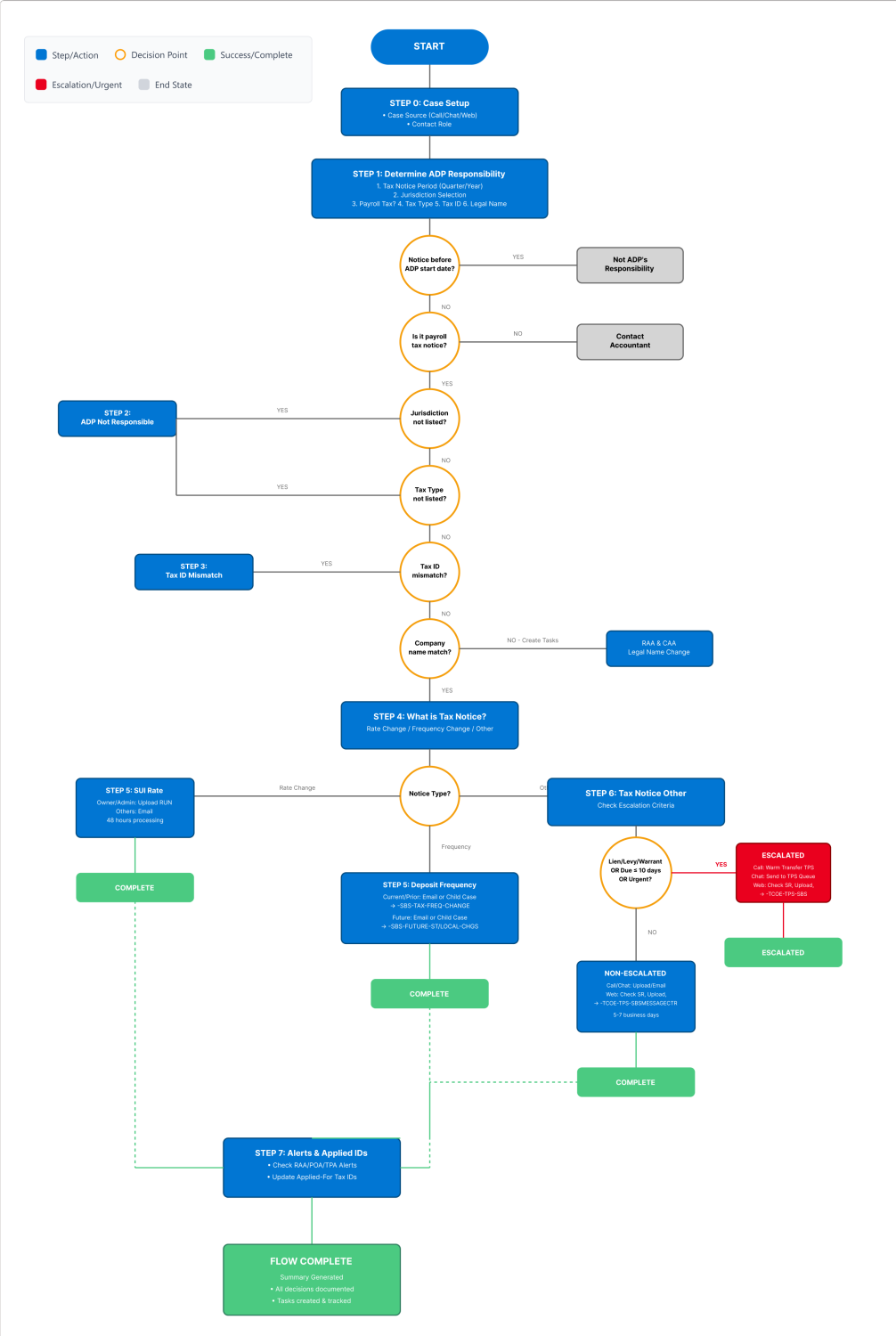
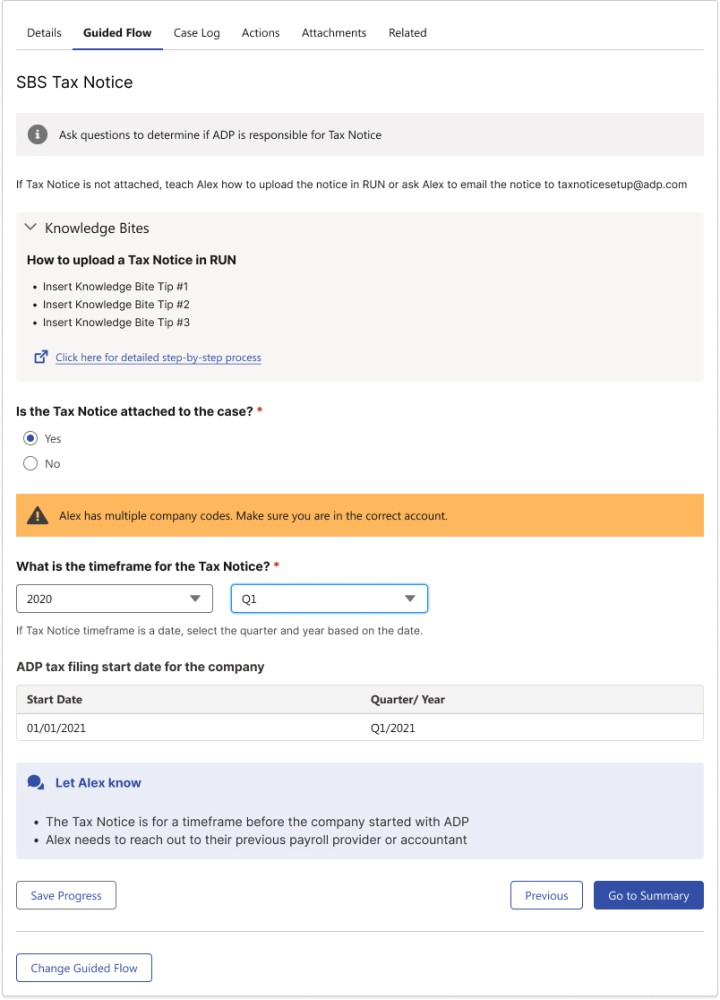
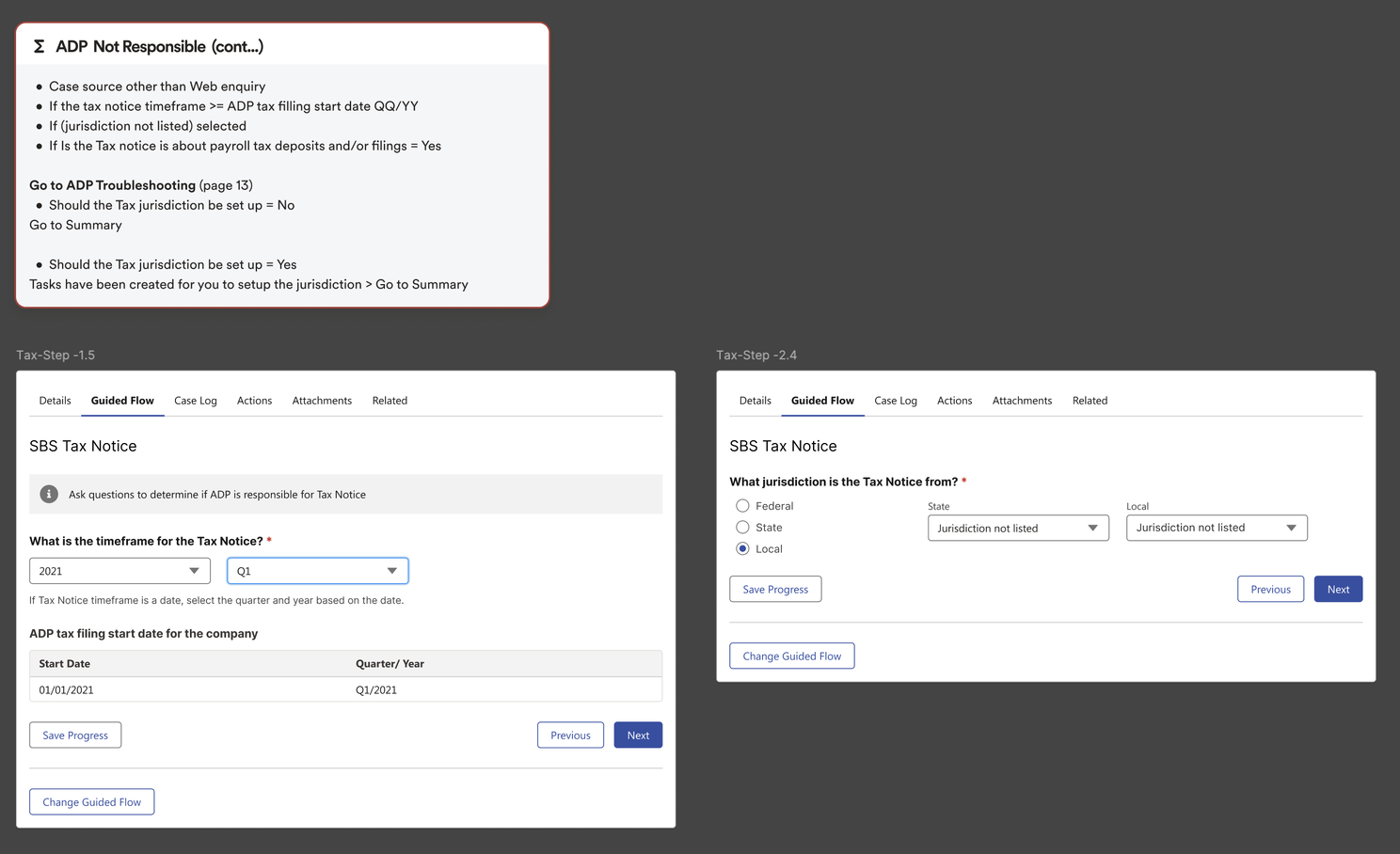
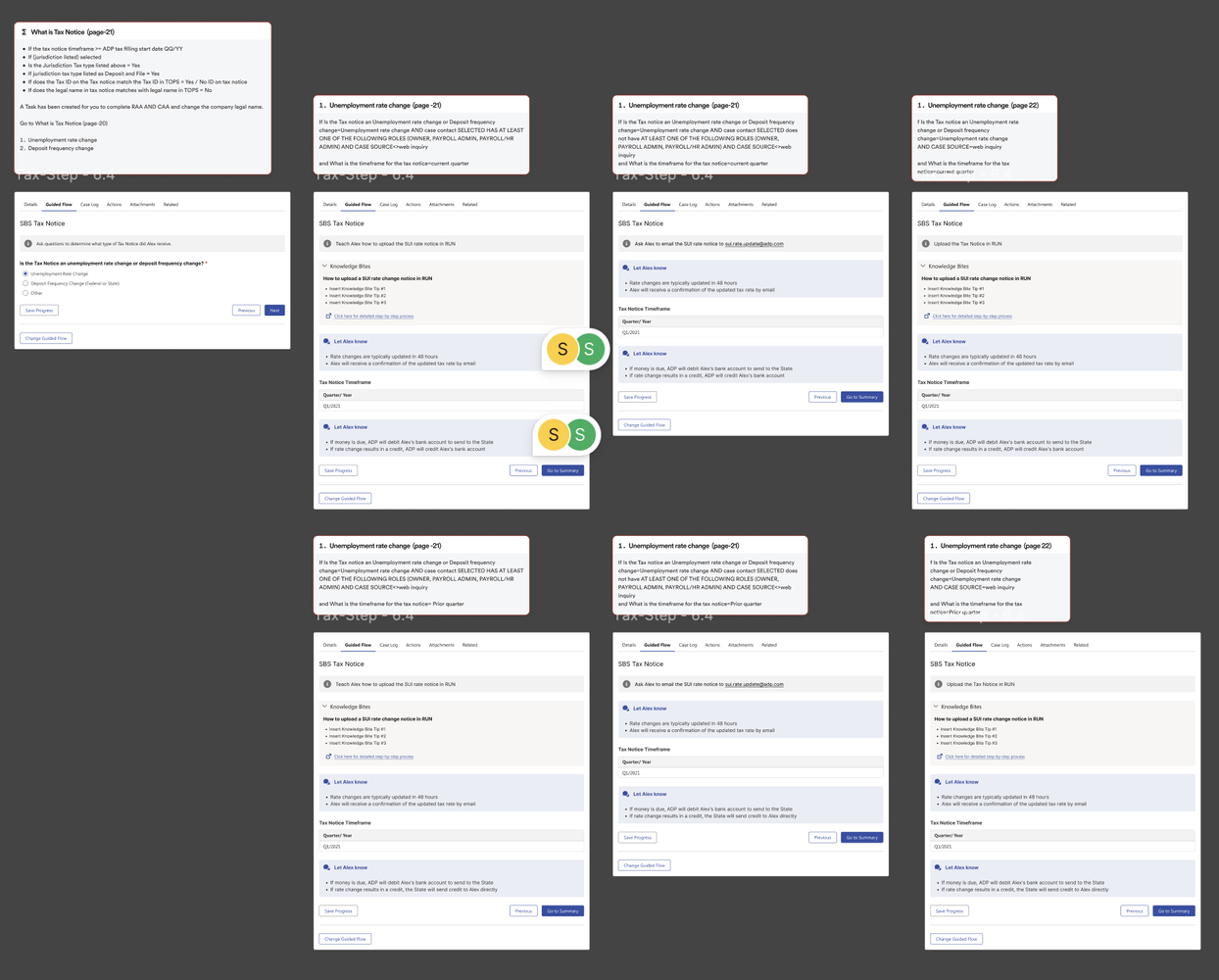
The Tax Notice Guided Flow embedded directly within support platform, no context switching, no separate tool. It guides associates through ownership determination, validation gates, structured notice classification, and either in-call resolution or qualified escalation.
The validation gate framework is the intellectual core of the solution. Each gate asks a specific question that determines whether the case can continue, needs correction, or should stop. The gates are not bureaucratic checkboxes, they are the exact questions that tax SMEs said must be answered before a case is valid to escalate. The design made those questions unavoidable.
Working within constraints of Salesfore flow-Builder while pushing for modern UX.
Coordinating with multiple teams to align on shared vision and implementation.
The reliance on legacy infrastructure and Salesforce Lightning Web Components (LWC) slowed development, as each new design solution requires custom coding.
How do we provide guidance without constraining the efficiency of high-performing associates who operate with speed and precision?
How much info should we show at each step? Confusion vs. feeling overwhelmed.
How can we help associates make quick decisions during calls?
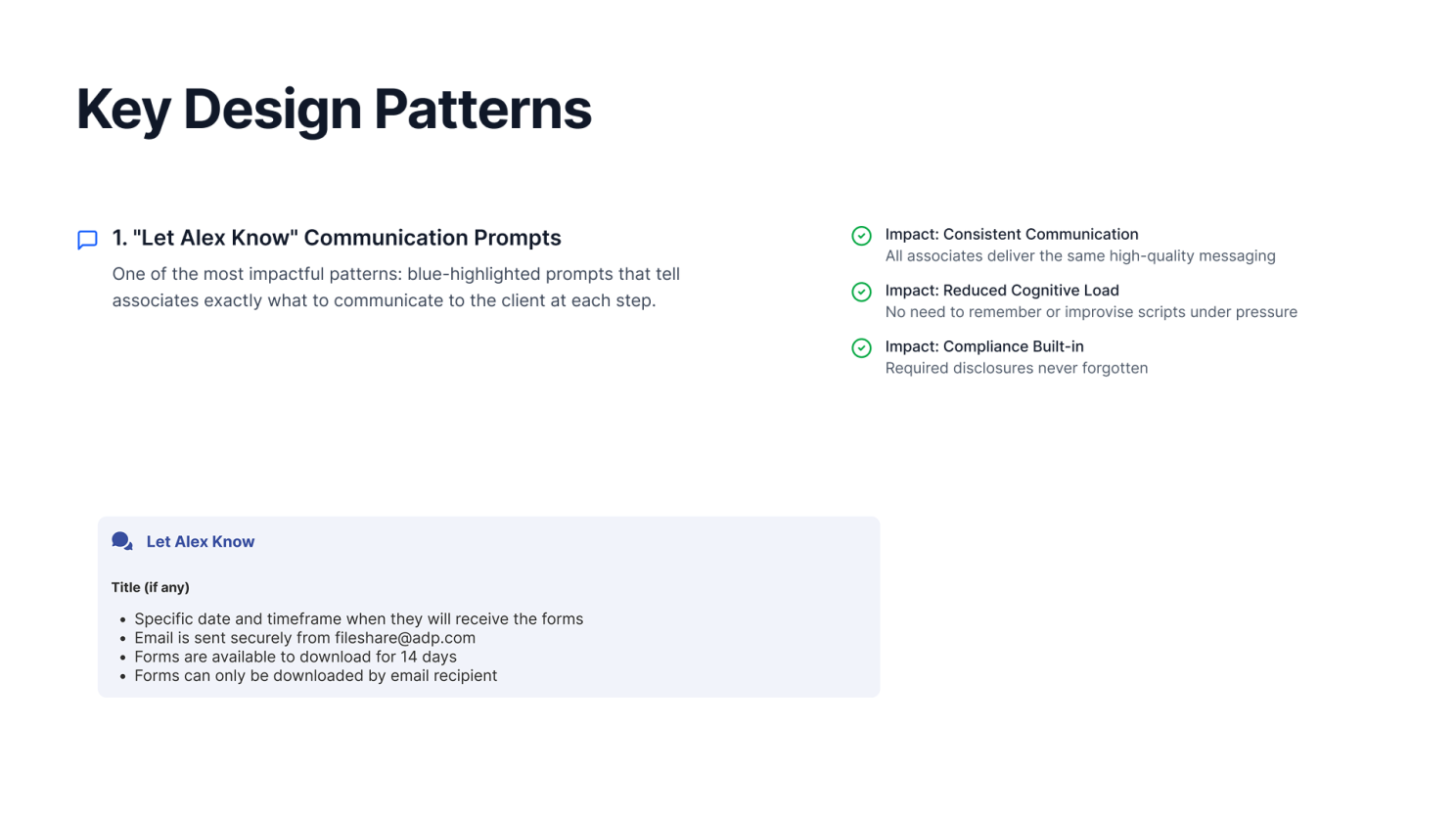
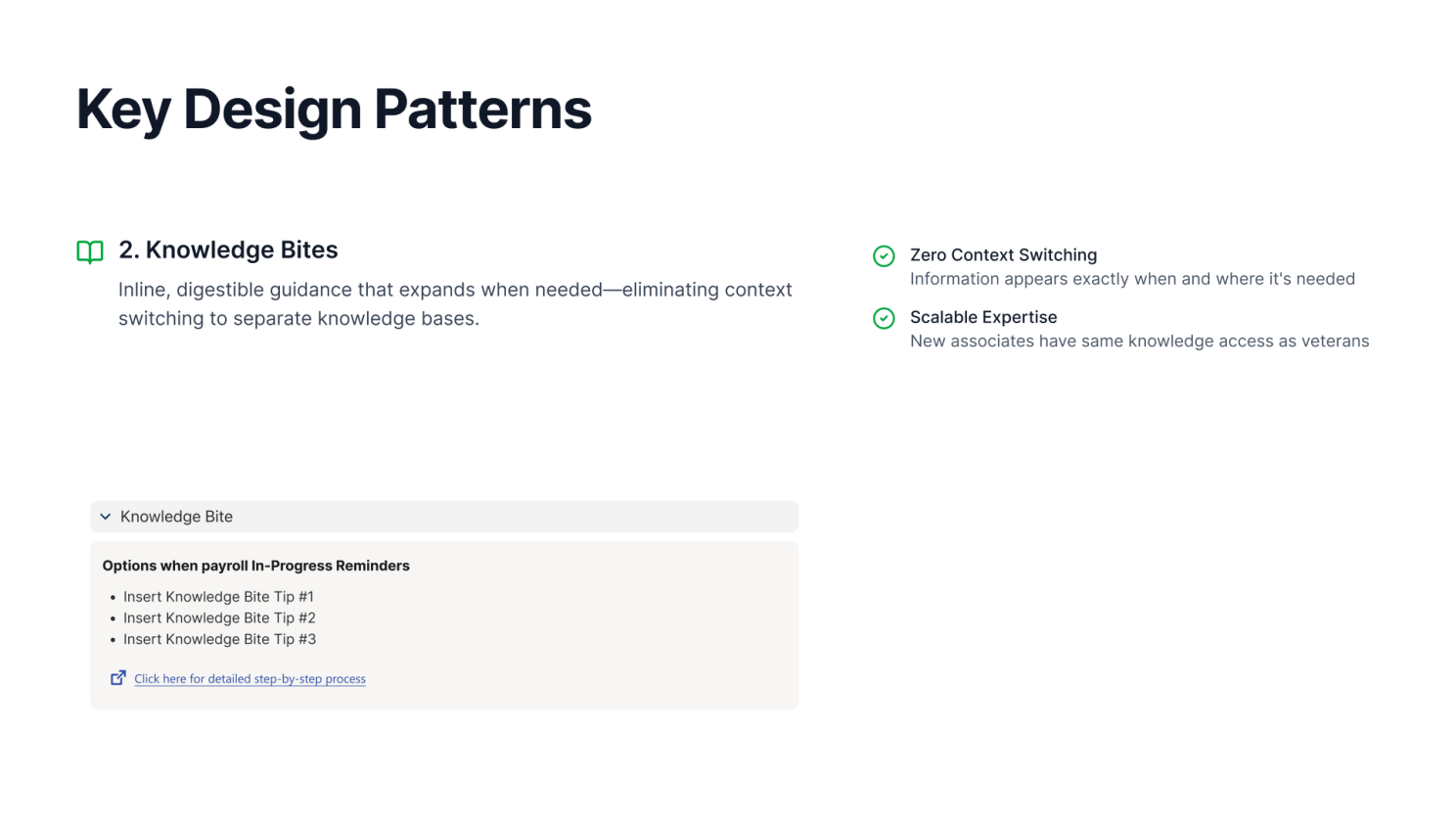
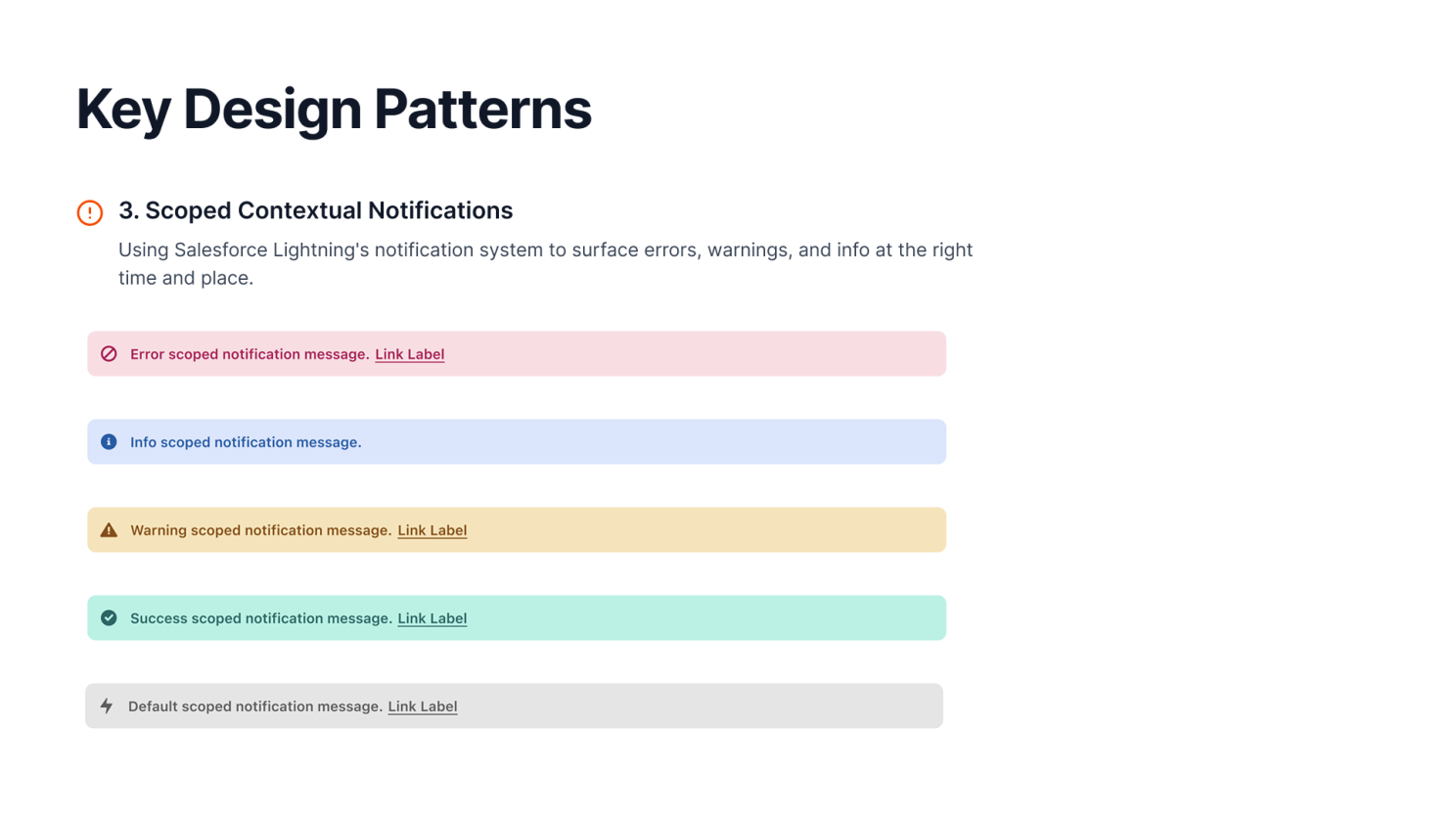
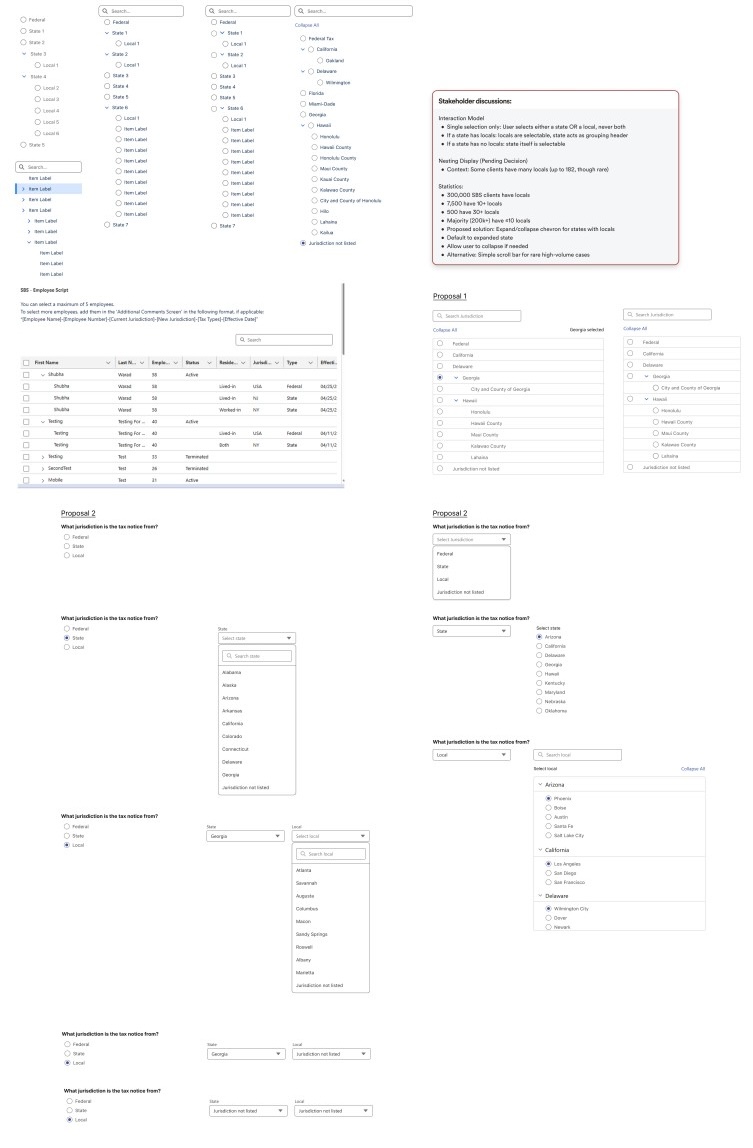
07 — Design Evolution & Concepts Not Pursued
Each discarded concept revealed something important about the real problem, and pushed the solution toward the validation-gate framework.
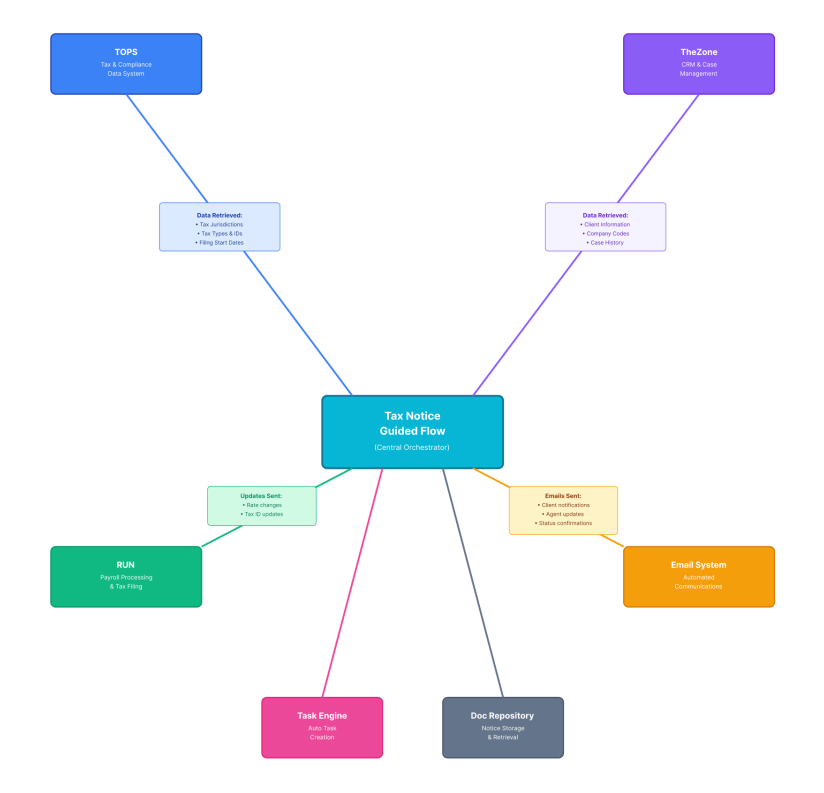
Enterprise design constraints are real. The solution had to live inside Service cloud, work with Salesforce case objects, support associates with varying experience levels, and handle compliance-critical decisions without automation risk. That combination ruled out several initially appealing directions.
Jurisdiction data from state and local agencies is highly unstructured and inconsistently formatted across federal, state, and local levels, making it unreliable.
Business rejected fully automated validation due to high agency-data variability, potential system latency, and the critical need for human-in-the-loop compliance. Incorrect automation poses significant regulatory risks and undermines the transparency required during high-stakes client calls. Instead, we adopted Guided Manual Validation, where the system surfaces contextual data while the associate confirms findings, ensuring each decision is accurate and explainable.
Prioritized a structured interface to maximize technical feasibility and reduce development costs, as internal tools derive more value from streamlined task completion than stunning interface. Current task-centric design leverages existing associate workflows to ensure familiarity and minimize training time.
08 — Impact & Outcomes
The guided flow was not designed for a single user. Every design decision was evaluated against how it would land for associates on the call, clients waiting for answers, and research teams receiving the escalated case.
Associates could tell clients exactly what would happen next, and why. That clarity had compounding value: fewer callbacks, fewer duplicate cases, fewer stalled investigations.
09 — Reflections & Learnings
This project refined a core belief: the time to structure a decision process is before the situation becomes stressful, not after. On a live client call about a penalty notice, an associate's working memory is occupied. The design's job is to hold the process so the associate can hold the conversation. Any interface that requires the user to remember the next step has already failed under pressure.
In enterprise compliance, I learned that information architecture and decision logic - not screen design - are the true frontiers of critical design thinking, where the sequence of validation gates directly dictates operational accuracy and business outcomes.
Reframing complex terminology as a structural design challenge, rather than a cosmetic one, enabled me to eliminate decision gaps and standardize case outcomes through contextual guidance.
The temptation to automate ownership determination was real. It would have felt like a more sophisticated solution. But in a compliance workflow, incorrect automation creates risk that no UX polish can recover from. Decision-support structured guidance that combines system data with human judgment, was the right model. The associate remains accountable, but the platform removes the inconsistency. That distinction matters: it protects the client, the associate, and the firm.
A design that helps one group and burdens another is not a solution, it is a redistribution of friction. The validation gate framework served associates, clients, and research teams at the same time. Associates had structure. Clients had faster clarity. Research teams had complete cases. That alignment happened because the design started from a shared definition of what a "valid escalation" meant, not from a single user's perspective, but from the full workflow. That systems thinking is what I carry forward into every enterprise project.
"The UI must do the thinking for them. Our associates shouldn't need to remember steps - the system should guide them through the right sequence every time."